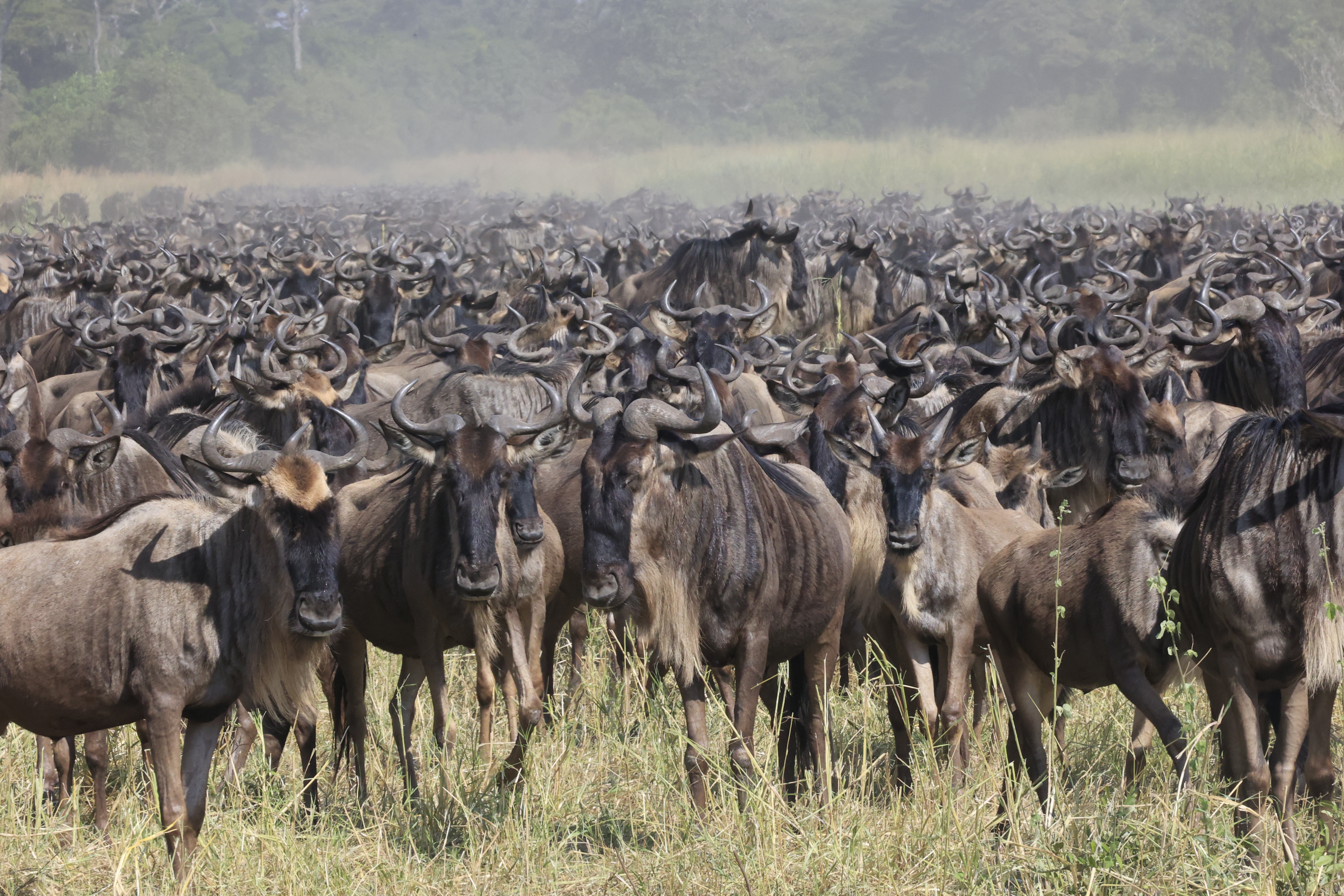
Early this year, i ran two great photography safari to South Serengeti (Ndutu) for a wildebeests calving experience. The small groups i led, each capped at only 4 photographers per trip, had a memorable safari of their lifetime. We started our trip in Arusha, then visited Ngorongoro Crater, South and Eastern Serengeti (Namiri) with lengthy stay in South Serengeti where the herds were concentrated. We were lucky in the at did not rain heavily, which allowed us free movement over the plains of South Serengeti looking for calving wildebeest. January-February is the peak of the calving season and our safari will perfectly coincide with this peak of the birthing season. The herds did not move to far from Ndutu woodlands, so we had easy access to where they were. The calving this year happened a little earlier in January so but eh time we started our trip on 3rd February, most had given birth. There were hundreds of calves seen on our trip. The most memorable experience was seeing hundreds of wildebeests crossing Lake Ndutu everyday in what is seen as a test-run, taking the young calves across the muddy shallow lake with many getting stuck while other manage to cross, coming out the other end very exhausted. There was also a lot of predation by Hyaenas, Lion and cheetahs who are normally abound in the area at this time of the year.
The was no shortage of photographic opportunities, from the wildebeests to the smaller creatures. This is what makes a trip great. There was also large flock of flamingos on the shores of the lake. Every morning we would leave camp while still dark and just watch as the day break while we took lots of photos of the birds on the shore against the sunrise. We always stay out the whole day. Our chef at Njozi camp, (Our base in South Serengeti) always prepares best take away meals for us to keep us out on game drive for the whole day.
SAFARI PICTORIAL: ALL PHOTOS CREDIT ©PAUL KIRUI